

The Credentialed Elite
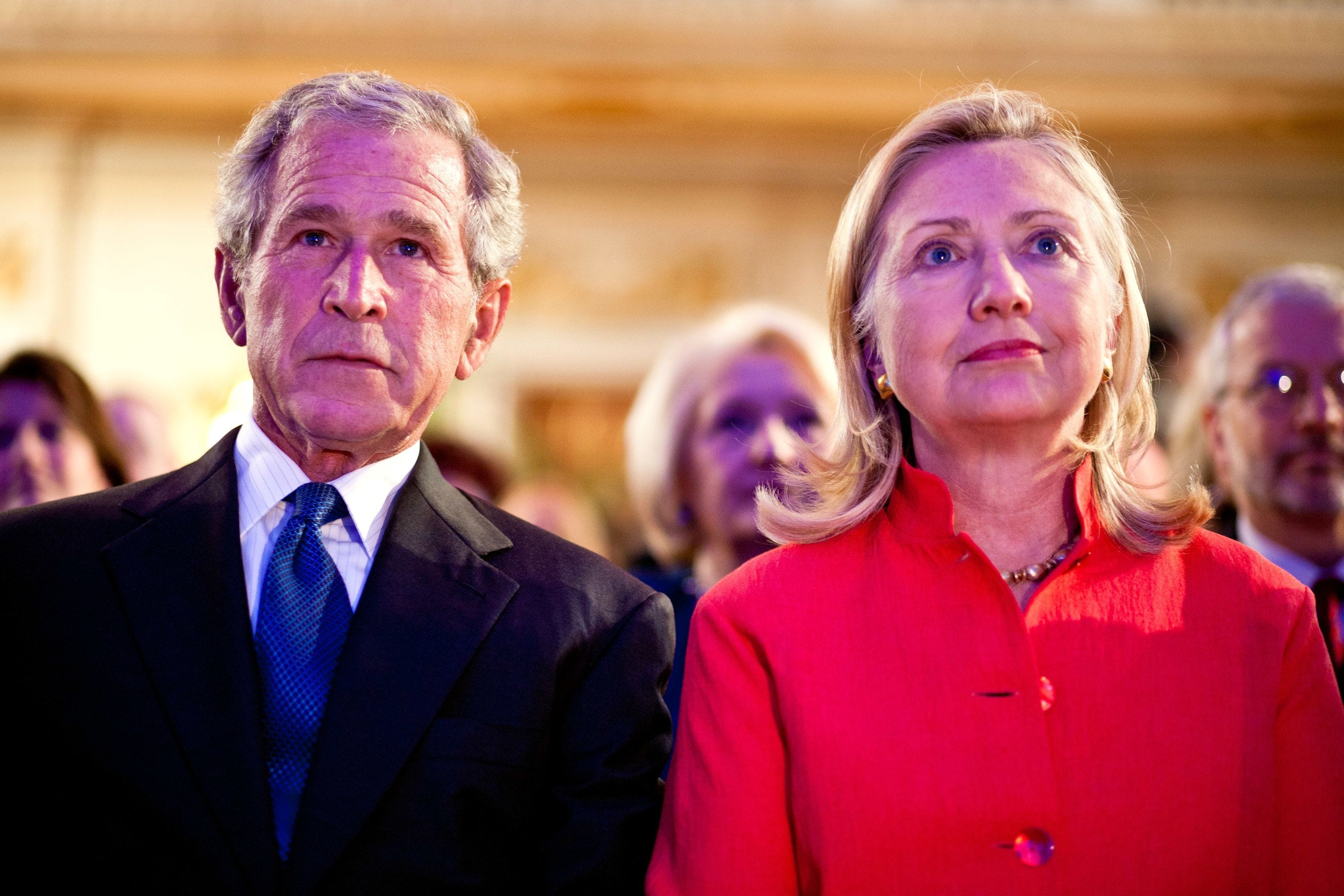
One (reductive, cynical, but mostly correct) way to model American government in the postwar era up until Trump’s first election is as the rule of a benevolent credentialed elite. Historically most of the members of this class were liberal, but many were not. They led both the Democratic and Republican parties.
Members of this class went to college. Many of them had some postgraduate education as well. They worked as lawyers, artists, journalists, academics, or in politics. Most but not all of them had above-average incomes. Even members of the credentialed elite in the top 1% by income probably considered themselves upper-middle-class rather than upper-class. Those who had lower incomes, such as journalists or artists, still socialized almost exclusively with the American elite.
Importantly, this credentialed elite has always made up a very small proportion of Americans. And yet despite their small size they dominated our information ecosystem. They controlled government, media, and academia.
This class can be considered separate from but adjacent to America’s corporate elite. Unlike the corporate elite, who had direct access to financial capital, the credentialed elite had control over the flow of information and worked in fields that intersected more directly with issues of politics and culture. Because of this, the corporate elite derived their understanding of our politics from the credentialed elite.
The liberal and conservative wings of the credentialed elite shared a reverence for the norms of American democracy. Both groups wanted to do right by the people and concepts they believed they represented. The differences in ideology that did exist between them were significant but not absolute.
In this period, everyone was presented with one narrative of the world: a narrative that was written by the credentialed elite but was accepted by all major sociopolitical groups. As a result, different social groups came to broadly similar conclusions about optimal policy directions. Any differences in preferred policy were derived from individual material and cultural concerns rather than fundamentally different understandings of the world. There was only one set of facts. This was true even for groups that never interacted with one another socially.
I should note that this does not mean that the underlying beliefs about the role of government in people’s lives were the same across social groups. Many Americans have always been open to authoritarianism, as the table below shows. But because authoritarian narratives were not disseminated widely, there was no outlet for such tendencies.

An environment with hegemonic narrative control from the credentialed elite should yield low political polarization. The two political parties will not diverge significantly in their perspectives on fundamental questions like America’s role in the world and the importance of democracy. The 2008 Republican and Democratic party platforms agreed on a lot; both parties heavily emphasized the need for international cooperation, strong voting rights, and the need for stable government.
This paradigm has since faded away. Five interrelated developments over the past thirty years explain the erosion of the credentialed elite’s power and how we’ve ended up at 2025 and Elon Musk’s evisceration of the civil service. First, the credentialed elite lost control of our information ecosystem. Second, their values drifted away from those of the median voter. Third, the previous two developments combined to create an opening for Donald Trump to come to power. Fourth, Trump’s populism had no intellectual foundation or policy prescription and so the thought vacuum was filled by the tech right, with JD Vance as its front-facing avatar. Fifth, all of these changes set the stage for tech oligarchs to gain control over our government’s levers of power.
Loss of Narrative Hegemony
The credentialed elite’s grip on American narratives fell apart due to the individualization of our information intakes and the democratization of information production.
For the first few decades after World War II, political information was mediated through newspapers and a few broadcast television networks. These organizations all made their money by selling advertisements, and towards that goal they cultivated a broad base of support. A couple of legal changes in the 1980s led to the emergence of a new type of news organization.
First, the Cable Communications Policy Act of 1984 deregulated the cable television industry, promoting competition and investment towards the goal of giving the general public “the widest possible diversity of information sources and services.” Then in 1987 the FCC’s fairness doctrine, which had required broadcasters to discuss controversial issues of public importance and present multiple contrasting perspectives, was abolished.
Just the next year, Rush Limbaugh’s radio show was nationally syndicated. Limbaugh could say whatever he wanted to cater to his highly conservative audience. Language like “feminazi” was verboten under the fairness doctrine, but now he could say what he wanted. And, as it just so happened, there was an audience for that.
Eight years after that, in 1996, Fox News was founded as a conservative cable news network. From the start, Fox focused on developing a conservative viewership. Roger Ailes, a Republican who had advised Republican presidents from Nixon to George H.W. Bush, was brought in as the CEO. MSNBC was founded the very same year as Fox, and eventually filled the same niche for liberal viewers.
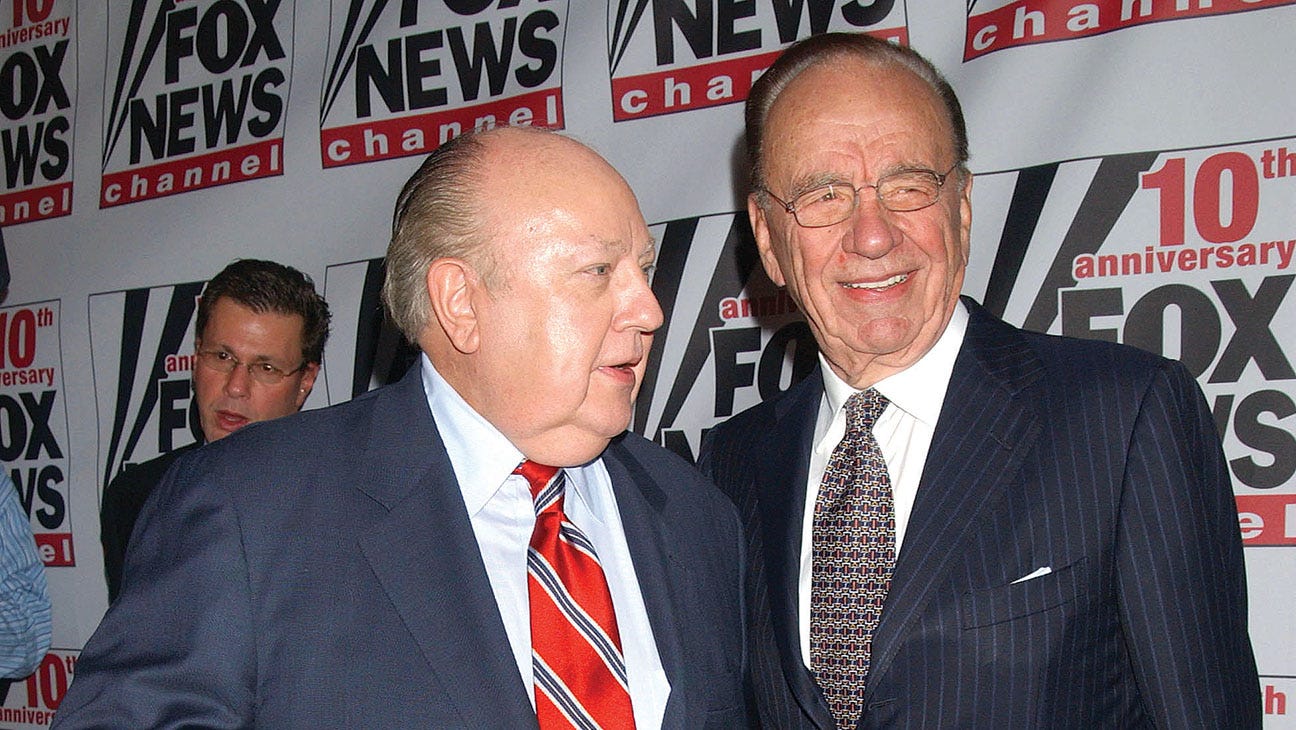
Without any fairness doctrine, and with the easy proliferation of news channels that was enabled by the Cable Communications Policy Act, these media organizations could fight for specific slices of the political pie. Fox and MSNBC came to believe that presenting unbalanced viewpoints was how they maximized their viewership, and with it their revenue.
A bigger shift came with the proliferation of the internet and the accompanying development of social media platforms like Facebook and Twitter. At first, people largely used social media to stay in touch with people they already knew from the real world. But eventually, all information that people saw was filtered through social media algorithms that, not unlike Fox News, strived to show people what they wanted to see.
In 2005, the Huffington Post was founded as an explicitly progressive news website, catering towards, of course, progressives. A couple years later, Breitbart News was founded as an explicitly conservative outlet in the same image. Former executive chairman Steve Bannon wanted the website to become “the Huffington Post of the right.” In this early phase, clicking on the links your friends shared to the Huffington Post or Breitbart on Facebook was how the internet helped to both funnel you towards more extreme perspectives and also calcify your preexisting beliefs, as your social circles were likely to be aligned with you politically.
There’s evidence to support the idea that exposure to the internet increases political polarization. One study analyzed the rollout of broadband internet in the mid-2000s and found that when broadband reached a congressional district it led to more partisan hostility and less ticket splitting, which the authors attributed to higher levels of consumption of partisan media.

The rise of the iPhone in 2008 accelerated the trends towards alternative, partisan sources like the Huffington Post. Within just a couple years, Americans were spending hours per day on their smartphones. The tech companies through which their information intake was now mediated were incentivized to show them what they wanted to see, which tended to be politically content that they already agreed with. The algorithms gradually became better at matching content to the consumer. This naturally increases polarization, so we’ve seen less ideological diversity within each party over time.

So, the individualization of our information intakes helps to explain heightened levels of polarization and partisan hostility. But these polarized narratives were still controlled by the credentialed elite, and so they mostly stayed within a smaller Overton window of beliefs that were acceptable to the credentialed elite.
Ultimately, the credentialed elite lost narrative control because information production itself was democratized.1 Today anyone can put up their shingle and start a blog, a YouTube channel, a podcast, or a TikTok account.
Previously, the only political narratives available to the electorate were those that had been put out by the credentialed elite. Under this new paradigm, there’s no barrier to entry for narrative production. Now, the entire feasible range of belief systems can proliferate with ease, as the individualization of our information intakes means that new narratives will quickly be directed algorithmically to those most inclined to agree with them.
Additionally, because of social media algorithms all those who generate information are incentivized to fall prey to audience capture by distorting their stories to tell their audience what they want to hear. Meeting your audience where they are gets more eyes on your content, which increases revenue whether you’re a Twitch streamer like Hasan Piker who wants to maximize views or a legacy media institution like the New York Times that needs to maintain its base of paid subscribers. Audience capture means that the content created will be more aligned with the beliefs of those consuming it, which is… sort of democratic?
Elite Morals
While this was all happening, a long-running postwar socioeconomic trend continued. In his 1977 book The Silent Revolution, political scientist Ronald Inglehart developed the concept of postmaterialism, which is the shift from individuals most valuing material security towards more intangible concerns like freedom, democracy, and equity.
He posited that as economic prosperity increased, the salience of economic issues would go down and the salience of moral issues would go up. This idea has held up empirically in the decades since then. But we should not blindly assume a universal postmaterialism that applies equally across class.

Income growth has not been uniform for every segment of American society. From the graph above, we should expect growth in postmaterialism to apply most strongly in the case of the wealthy and those who are socially proximate to the wealthy: in short, the elite.
The aforementioned changes in the information ecosystem also allowed narratives to be tailored for specific social groups. Before, even if the credentialed elite were the only ones writing the dominant political narratives at least everyone consumed those narratives. This changed with the influence of the internet; now some narratives would circulate only among the credentialed elite.
As a result of rising postmaterialism and the social stratification of information, politics become moralized and morals become localized. The credentialed elite can write to each other about the moral urgency of politics and feel like they are writing to everyone; they can feel like they are still doing the same job as before, when they had hegemonic control of the narratives available to the electorate.
As questions of meaning and justice came to dominate material concerns among the American elite, narrative-producing occupations became more attractive. Getting a job at the New York Times requires a boatload of credentials now, so the people who get those jobs will disproportionately have been raised by families with significant financial and/or cultural capital. As such, the credentialed elite themselves ended up coming from more elite backgrounds than ever before.
These effects combined to create a vicious cycle of the credentialed elite rapidly moving to the left on cultural issues even as the median voter did not. The Democratic party had always done more for the social safety net and on questions of race, so most of the credentialed elite who were Republicans became Democrats. Today much of the leadership of the Democratic party is far to the left of the electorate ideologically, while the leadership of the Republican party is only slightly to the right of the electorate.

Due to the Democrats becoming the party of the postmaterialist credentialed elite, we’ve seen their supporters move to the left on cultural issues even as the median voter has stayed in mostly the same place. This trend became especially pronounced around 2010, when tech algorithms began to dominate our information intake.

As a result, the Democratic party became the party of elite morals. They moved in lockstep with the left branch of the credentialed elite when it came to cultural issues. This opened them up to vulnerability on these issues that has been exploited by Donald Trump.
An Opening for Trump
When Donald Trump launched his campaign for the presidency by calling Mexicans rapists, he was treated by the mainstream media as a sideshow. He was openly bigoted and authoritarian, which made him persona non grata among mainstream media sources, including Fox News.
But for some reason, his numbers were good. He kept leading in the polls, he kept impressing people. In a different time, the incessant negative coverage from the mainstream media would have sunk him. But now those who saw something they liked in Trump could find an alternative outlet for that. If they were already inclined to look at Trump coverage online, now they would be shown Facebook posts expressing admiration for Trump, or find themselves in a subreddit full of people who kept talking about how they liked the way Trump talked straight.
He spoke to the latent authoritarianism in the electorate. He represented the antithesis of the elite morals of the Democratic party, which had diverged significantly from the median voter. No politician in the postwar era had ever done such things.
This was out of scope for the credentialed elite; it was a phenomenon no one recognized. There had never before been a candidate who so nakedly rejected the norms that the credentialed elite genuinely valued, and because the credentialed elite typically never spent time with anyone who would actually find such rhetoric attractive his appeal was impossible to grasp. This was true even among the conservative wing of the credentialed elite, many of whom tried to sink Trump at first in favor of a candidate they thought they could win over America: like, say, John Kasich.
Still, when it became clear that he would win the primary the conservative elite began to coalesce around him. For conservative news organizations like Fox News, they needed to do this in order to maintain their viewership. To reject Trump would have been to give up much of their audience in favor of sources like One America News Network.
However, they still didn’t expect Trump to become president. Yet he pulled it off, thanks to the availability of new narratives that were sympathetic to authoritarianism and the Democratic party’s hard shift towards elite morals.
We can break down how these last few elections have reshaped the demographic composition of the party coalitions. Before Trump, the Democratic base was made up of three groups: college-educated professionals, people of color, and working class white folks.
Fortunately for the Democrats, the population of the first group, college-educated professionals has gone up a lot over time. Continued American prosperity has meant that there’s just a larger group of “elite-adjacent” people who are economically stable and educated. Immediately after World War II, college-educated professionals made up only 4% of the electorate. Now, that number is closer to 35%. Also, because of the social siloing discussed earlier, this group has been moving to the left over time.
Another point that would appear favorable for Democrats is that America has been getting more diverse over time, and Black and Latino voters have long preferred them by huge margins. Historically this has held true even though these voters are significantly to the right of the Democrats on the moral issues we discussed earlier. There’s even a 2002 book, The Emerging Democratic Majority, that posited that growth in the Latino population would create an enduring majority for Democrats.
But that third group, the white working class? By 2016 the Democratic party was associated more strongly with standing up for marginalized groups like people of color than with the working class, so this group felt a bit abandoned. And, like people of color, they were to the right of Democrats on moral issues. Their latent authoritarianism, cultural conservatism, and sense that the Democrats didn’t prioritize them made it easy for Trump to win them over.

This group swung strongly towards Trump in 2016, and with them went Michigan, Wisconsin, and Pennsylvania. The white working class has stayed a largely Republican bloc since then.
Contrary to what many prognosticators anticipated, the last few election cycles have also brought race depolarization to American politics. Although Democrats are seen as standing up for marginalized groups, there is still that large cultural gap between Black and Latino voters and Democratic party positions.

That gap hasn’t always been fatal at the ballot box. In 2012, less than 20% of Black people who were “very conservative” on sociocultural issues voted for Republicans. In 2016, Trump’s first election, it was closer to 30%. In 2024, it was over 50%. This erosion of support among people of color is enough to swing an election, and in fact it has swung elections. And so we get headlines like “The Emerging Democratic Majority, Dead at 22.”
These coalition changes decoupled the Republican party from its traditional intellectual and demographic foundations, creating a void that, for a time, went largely unfilled.
Intellectual Vacuum on the Right
The two basic principles uniting Trump’s coalition have always been devotion to Trump personally and a rejection of elite morals and norms.
This opens up new policy avenues. Under the political incentive structure Republicans are now faced with, trampling over precedent doesn’t lead to a rebuke in the ballot box. The government can act with much more agility.
That theory was not tested rigorously during his first administration, simply because there had been no time to prepare. The Republican party was still run by people who had been immersed in the principles of the credentialed elite for their whole lives. There was simply no infrastructure in place to convert his promise of overturning the system into reality.
But devotion to Trump and rejecting elite morals does not present any positive vision for what America should look like. Trump himself is not a very ideologically motivated person, and so the ideology that came to dominate the Republican Party was an ideology centered around the veneration of Trump personally.
The old guard of John McCain-style conservatism became obsolete, replaced by figures who understood that their political survival depended on aligning not merely with Trump’s base but more importantly with Trump himself. Those who once championed state’s rights and low taxes now spoke in the language of economic nationalism and cultural grievance. They championed whichever policy Trump had mentioned most recently, whether it was banning Muslims or annexing Greenland. They proposed that we put Trump’s face on the hundred dollar bill.
Most of them had spent their whole lives up until Trump’s election immersed in an elite morality that venerated the institutions that Trumpism demands they scorn. Audience capture is a powerful thing, and so these people’s political beliefs have changed radically in the last decade. In 2016, current Vice President JD Vance publicly called Trump “reprehensible” and “an idiot;” in private, he compared him to Hitler. Once he entered Republican politics, of course, that all changed.
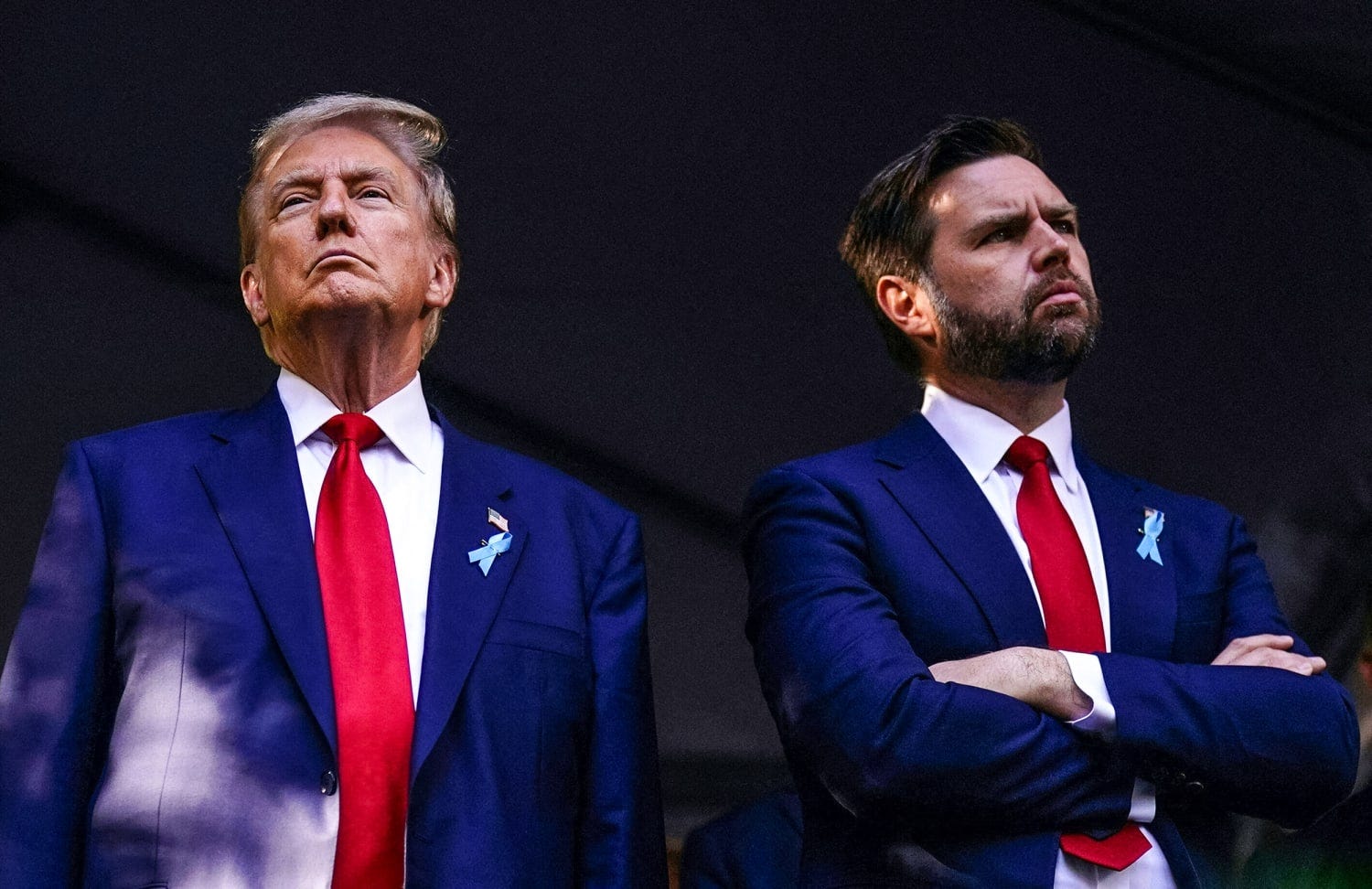
But these dynamics had led to a somewhat aimless first Trump administration. The stage was set for an intellectual rationale for Trumpism to develop, for a thought movement that would take the possibilities of this new paradigm and channel them towards radical political reorganization.
Dark Enlightenment
Earlier I discussed the corporate elite, and how they took their political cues from the credentialed elite. When tech platforms came to take on an outsized role in American life, a new tech elite developed—one that was distinct from the standard white-collar professional class that had long dominated business and finance.
The members of the tech elite were more likely to be foreign-born. They revered college dropouts like Steve Jobs and Elon Musk, men with agency and vision who were able to win not despite their nonconformity but because of it. Crackpot beliefs flourished in tech circles long before Breitbart came around, because these were people who knew how to find kindred spirits on the internet long before Facebook algorithmically drove us towards those who agreed with us.
There’s also something fundamentally different about the type of work that is done in tech. It’s not like working for an investment bank or selling office supplies. Tech solutions scale, and tech is pervasive in how it affects every facet of our lives. Meaningful innovations can, and often do, rewire the way we relate to one another. The promises of technology can be intoxicating, spurring people on to explore ideas far beyond what would be considered in mainstream discourse.
And so, for the last twenty years, Silicon Valley has incubated its own intellectual movements. Wall Street, of course, has not. Tech circles gave us rationalism, crypto-anarchism, and the aforementioned Dark Enlightenment, which was a rejection not just of contemporary liberalism but of democracy itself.
It was software engineer Curtis Yarvin, writing under the pseudonym Mencius Moldbug, who articulated this rejection most clearly. He argued that liberal democracy was a sham, its power held not by elected officials but by an entrenched “Cathedral” of media, academia, and bureaucracy; this Cathedral is basically equivalent to the credentialed elite. For Yarvin, real reform was impossible within the existing system. The only solution was to dissolve the entire structure and replace it with an authoritarian regime, ideally run by a tech CEO who could govern like a king.
Yarvin’s writing circulated in obscure corners of the internet throughout the late 2000s and early 2010s, finding an audience among certain libertarians, reactionaries, and disaffected tech workers. Nick Land, a British philosopher turned accelerationist, took the anti-democratic thread of Yarvin’s work and fused it with a more nihilistic, techno-futurist perspective that saw the collapse of liberal institutions as not just inevitable, but desirable. Land coined the term Dark Enlightenment to describe such ideas.
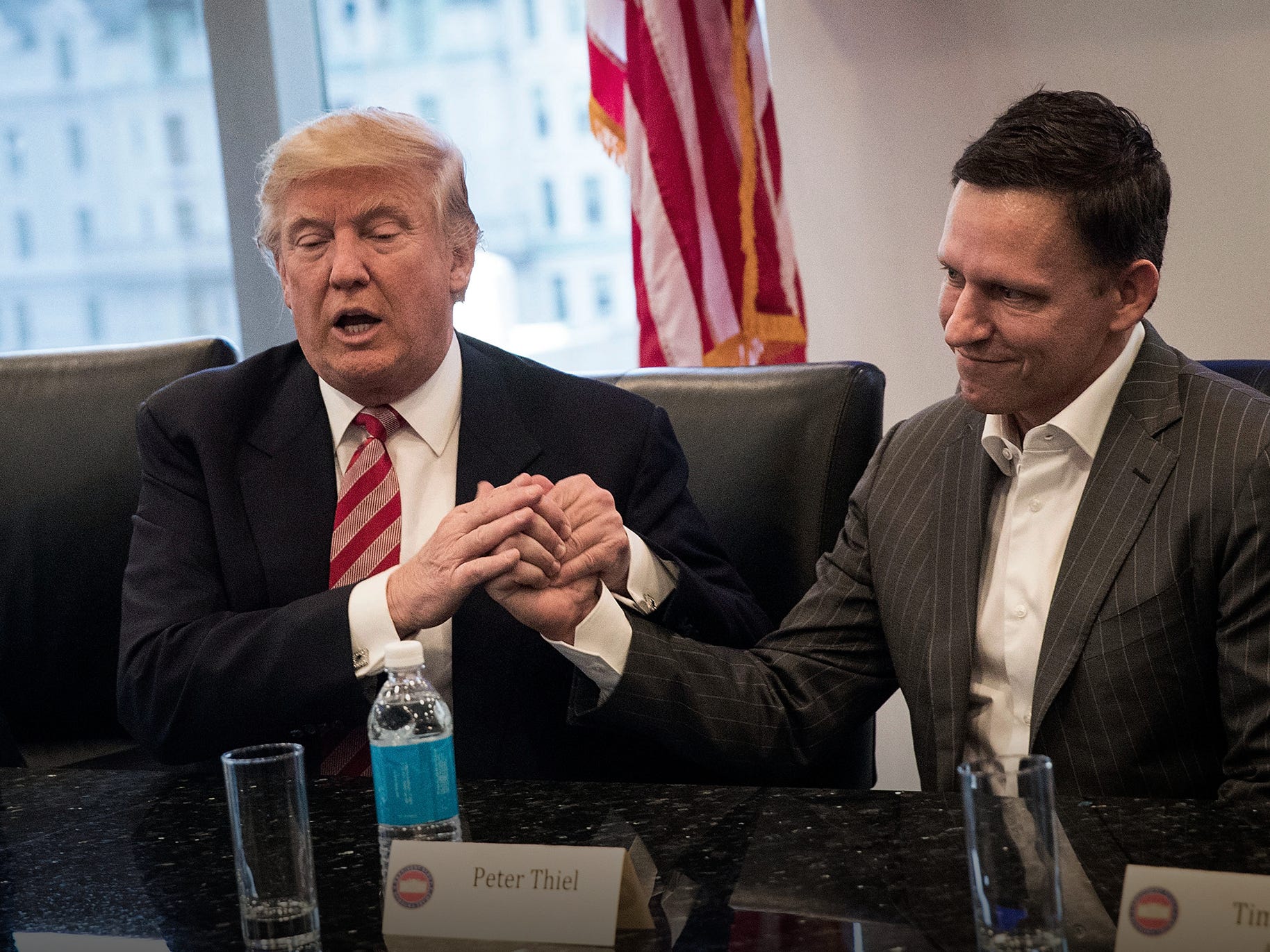
Before long Yarvin’s ideas found support from one very important figure in the tech world: Peter Thiel. Thiel is a venture capitalist and entrepreneur who co-founded PayPal and Palantir and is worth many billions. He is considered the “don” of the highly influential PayPal Mafia, whose members have led or founded Tesla, LinkedIn, Yelp, Palantir, YouTube, and more.
His political leanings have always been different from other tech leaders. While his peers largely subscribed to some variation of libertarianism or milquetoast progressivism, Thiel has long been an outright reactionary. He shared Yarvin’s skepticism of democracy, famously writing once that he no longer believed freedom and democracy were compatible.
Still, this was all theoretical. Even with Thiel’s support, these ideas remained fringe, even within the already niche world of Silicon Valley intellectual subcultures. And the ideas were impractical; the credentialed elite had held tightly to power ever since FDR, and there was no reason to think that the Cathedral would start to crumble, allowing Yarvin’s monarchist dreams to come to fruition.
But then Donald Trump came along. Thiel recognized in the run-up to the general election that Trump was aligned with his political interests. He spoke at the Republican National Convention and donated over a million dollars to Trump; a few weeks before the 2016 election the New York Times identified him as “the only prominent supporter of the Republican candidate in the high-tech community.”
Despite Trump’s entire platform and aesthetic constituting a big middle finger to the credentialed elite, he managed to win that election and become America’s president. Thiel and Yarvin were actually together as the results for the 2016 election rolled in. I wonder what they were talking about. Did they think that Trump’s election marked a fundamental change in American politics towards their vision of society?
When Trump rose to power, Thiel tried to capitalize, to mold the government towards that shared vision. He made sure that one of his protégés, Blake Masters, had an office in Trump Tower. Thiel and Masters tried to ply people like Steve Bannon who already had influence in Trump circles. Where Yarvin called for his monarch to “Retire All Government Employees,” Bannon vowed in 2017 to fight for the “deconstruction of the administrative state.”
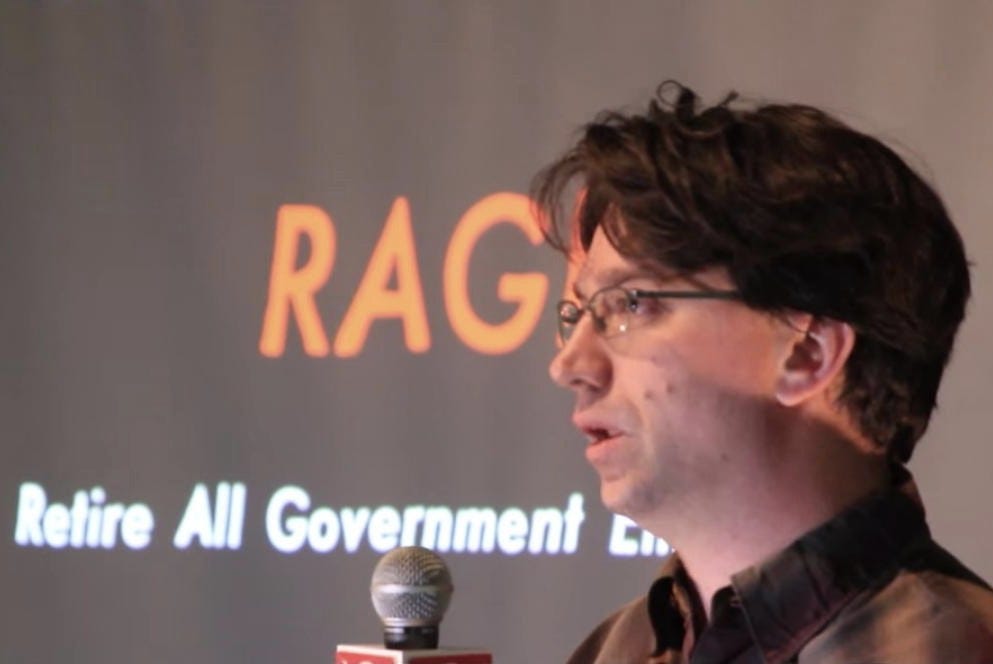
And yet, that deconstruction did not come to fruition in Trump’s first term. There were too many obstacles in Trump’s way; the administrative state was fighting back, with the credentialed elite in the Republican party initially refusing to step aside voluntarily. A blunter instrument was necessary.
It was another Thiel protégé, JD Vance, who outlined how a future Trump administration could effectively actualize the deconstruction of the administrative state back in 2021 on a manosphere-adjacent podcast. Back then he was just known as the guy who wrote Hillbilly Elegy. He was polling at second place in the Ohio Senate Republican primary.
“I’ve always been very sympathetic to the idea that we don’t have a real constitutional republic anymore; what we have is an administrative state.” Vance did not like this administrative state. “The administrative state controls everything, right, to the point where when Trump wins he can’t even get his people in core positions of authority in the administrative state.”
“I think we should eliminate the administrative state… Trump is going to run again in 2024. I think that what Trump should do, if I was giving him one piece of advice: Fire every single midlevel bureaucrat, every civil servant in the administrative state, replace them with our people.”
“And when the courts stop you,” Vance said, “stand before the country, and say the chief justice has made his ruling. Now let him enforce it.2”
This is the playbook we have seen used four years after Vance outlined it, a playbook that I do not think is native to Trump’s mind even if it appeals to his desire for power. This is the Yarvin playbook, this is the Thiel playbook, and this is the Vance playbook.
Tech Oligarchy
In a Curtis Yarvin piece from 2021, he explained that wealth does not constitute political power. For Yarvin, the hegemonic Cathedral is far more powerful than Jeff Bezos with his hundreds of billions of dollars. For Yarvin, Bezos has no power over even the newspaper he owns; if he were to move against the Cathedral he would be laughed out of the room and rendered powerless.
What can Jeff Bezos do with his two hundred billion dollars? Well, it turns out, he can buy the Washington Post, the world’s second most important newspaper. That ain’t nothing. But… can he tell the Post what to say? As though he was W.R. Hearst? Lol.
Jeff Bezos does not really own the Post. He sponsors it, as if it was the Indy 500. If he sponsored the Indy 500, and decided the cars should have five wheels and a rocket exhaust, and also it should go farther and become the Indy 2500, they would tell him to go pound sand. If he started telling the news desk what to write and cover, like Hearst, or even like “Pinch” Sulzberger, they would laugh at him and quit. (Pinch’s heir, sadly, seems to have ceded that power to the NYT’s Slack—like many a weak monarch of a waning dynasty, letting his authority decay into an oligarchy. Hard to get it back, bro.)
This theory may have sounded right back in 2021. In that world, it had yet to be disproven. No one had dared to upset this paradigm; perhaps Rupert Murdoch was the exception that proves the rule. The billionaires who owned newspapers and tech platforms still took their cues politically from the credentialed elite/Cathedral. They focused on maintaining respectability for themselves and their platforms, which meant adhering to elite morals.
This began to change when Elon Musk bought Twitter (now known as X) in 2022. He nakedly weaponized a social media platform towards political ends: namely, the election of Donald Trump. He claimed that changes to the X algorithm were all towards the goal of free speech. While there was probably less censorship overall, issues of algorithmic favoritism and suppression were and are very real on the platform. Internal to X, we switched from the broad-based, decentralized hegemony of the Cathedral to the hegemony of one man: Elon Musk.
There has been some backlash, sure, but the attrition was manageable. Elon was able to singlehandedly shift the discourse in his desired directions without the platform being abandoned at any real scale. He proved that it is feasible to exert this kind of influence by manipulating social media algorithms.
Trump won, with an assist from Elon’s X. In thanks, Trump has given Musk significant power over the federal government. It is now Musk’s job to realize Yarvin’s vision of eliminating the administrative state through the Department of Government Efficiency.
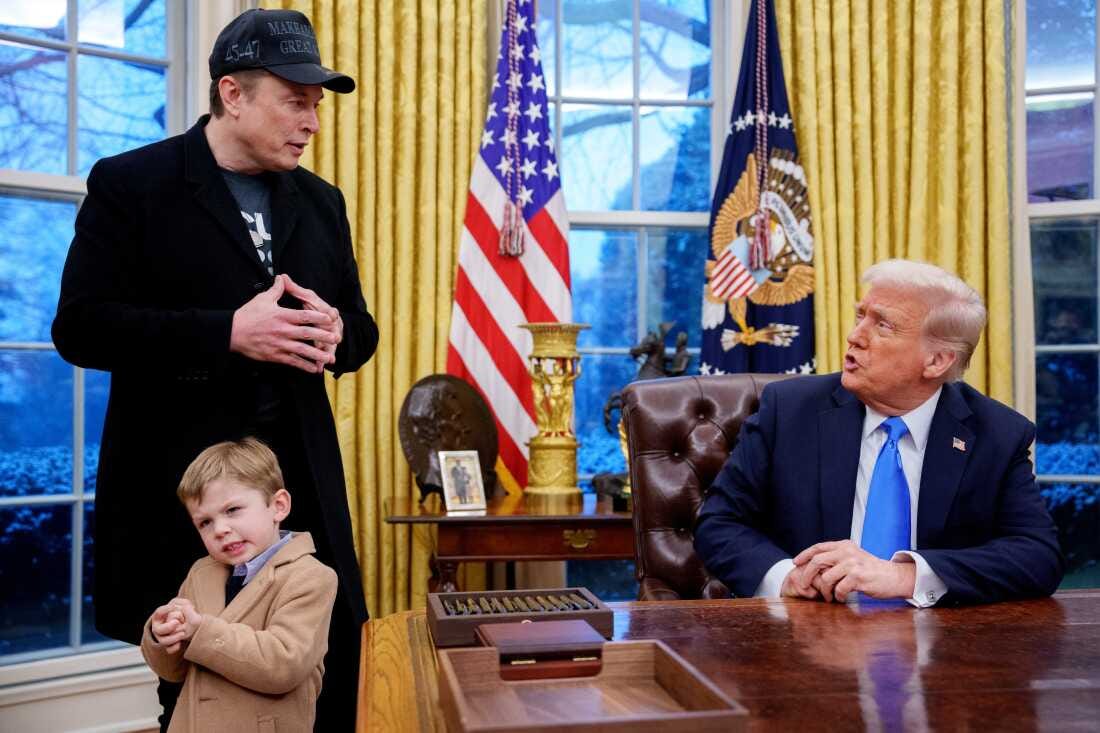
Elon utilized X to help his favored candidates win their elections, and he has benefited significantly. He holds immense political power, and so after the election his companies spiked in value because of the assumed benefits this political power will grant them. His loyalty to the executive has seen him rewarded. Now what reason is there for other tech leaders to adhere to the old elite morals of the Cathedral at all?
In the run-up to the 2016 election Palmer Luckey was fired for donating to Trump. Things have since changed. In December Meta’s Mark Zuckerberg, Amazon’s Jeff Bezos, OpenAI’s Sam Altman, Apple’s Tim Cook, and Uber’s Dara Khosrowshahi each donated $1 million towards Trump’s inauguration. Zuckerberg announced changes to moderation policy that will enable the spread of incendiary conservative rhetoric; he’s moving the moderation team from California to Texas. Bezos prohibited the Washington Post from endorsing a candidate in the presidential election. Then after Trump’s inauguration Bezos announced that the Washington Post opinion section will now be focusing its content on free markets and free people, under his watchful eye.
There is a new frontier of political influence; social media platforms can and will be utilized towards political ends, with their owners and CEOs putting their thumbs on the scale. In a world without an administrative state, power resides in the hands of the executive. If the executive can make or break your corporation, you will do everything you can do be on his good side. For rich guys, that now includes pumping money into Trump’s memecoin to get the SEC to drop its case against you. For tech companies, that now includes algorithmic manipulation.
While the United States is still holding elections, it’s important for the party in power to maintain public popularity, and now that our institutional norms have changed irreparably the leaders will do whatever they can to sway public opinion. In a world where our information intake is largely mediated through digital platforms, the “algorithmic capital” held by tech leaders is the most valuable resource out there. The tech leaders have shown that they will trade this algorithmic capital for economic benefit.
Most of this article was written long before the recent tariffs. In the short run, Trump’s tariff policies have not been perfectly aligned with this framework. He has decided to try to blow up the global economy because someone told him trade deficits are bad. Even Elon Musk and Bill Ackman think this is stupid.
But in the long run, I think we will see more disciplined leadership even from despotic leaders. A future President Vance, surrounded by figures from the tech right, would act more rationally given his incentives and constraints. He would hand significant power to tech oligarchs in exchange for access to their algorithmic capital, for the same reason that Elon Musk has been given latitude to reshape our bureaucracy.
Technological developments and accompanying changes to our information environment have brought us Trump and the disempowerment of Yarvin’s Cathedral. We’re on track to have the rule of the credentialed elite replaced by the rule of a small crop of tech oligarchs. I for one prefer the credentialed elite, for all their flaws.
David Shor argues that this democratization of information production was actually a return to the early 20th century norm. He alleges that the electorate has always been authoritarian relative to the elite, and that for the first half of the 20th century radio enabled the dissemination of narratives that appealed to that authoritarian instinct, as it was easy for anyone to distribute radio; there were far fewer barriers to entry that made it so that only the elite could generate such narratives. After World War II, governments consolidated radio and television by either cartelization or public broadcasting in order to regain elite control over political narratives. For Shor, technological trends we’ve seen in the last twenty years have opened the door for the political disruption we’ve seen across the West, not unlike the rise of fascism in the 20th century.
Here Vance quoted Andrew Jackson, in a callback to a time when Yarvin’s Cathedral was not yet fully established, to a time when the norms of American democracy were far more fragile.
Damn you should have to pay to read this (but more people should read it)
odd that there’s no mention of the twitter files or similar censorship grievances many tech executives have aired about previous administrations