

“People I don’t like are spiritually Israeli”
Denver. Bisexuality. Labubus. Benson Boone’s Crumbl Cookie. What do all of these things have in common?
According to internet anti-Zionists, they are all “spiritually Israeli.” What does this mean? God only knows, but in recent weeks the term has been deployed across social media to describe anything that the poster dislikes: with the exception of Israelis, who are spiritually Estonian.

In past articles I’ve written about how we use language in order to signal our group allegiance, and how this leads to neologisms developing. But why this particular neologism? Why would anyone gravitate towards calling something “spiritually Israeli”?
There’s a basic principle that states that we should not denigrate entire nations and their cultures, but this is clearly violated in the case of “spiritually Israeli,” which is always a negative descriptor. Many on X have argued that the term is antisemitic.
Unfortunately, the very controversy that is inherent to using obviously prejudiced language is part of what motivates it. Calling something “spiritually Israeli” shows your audience that you disrespect Israel and its people, and that you are not afraid of engaging in what others may construe as antisemitism. This makes it an example of costly signaling.
Costly Signaling
Costly signaling is a concept from evolutionary biology that explains why organisms engage in behaviors that seem wasteful or risky. Various deer and antelope species do something called stotting, in which they jump high into the air. They are more likely to stot when predators are nearby, even though this behavior makes them more visible to predators and also uses time and energy that could be spent escaping from said predators.
Thus the question arises: why would they do this? The leading theory is that stotting sends a costly signal of the prey animal’s fitness. The animals that are fit enough to jump high into the air when predators approach are more likely to be fit enough to successfully escape the predator. If the predator understands this then they will try to find something else to eat. The signal is more credible to the predator because of its cost. An animal that is not fit would not be able to waste resources on stotting.
The same principle of costly signals being more credible maps to human social behavior, and has been researched extensively in this context, with conspicuous consumption of luxury brands as one example. We can also analyze costly signals of political affiliation. When someone makes statements that repulse those in other factions, they credibly demonstrate their commitment to a cause
The signal in using “spiritually Israeli” as a pejorative is costly because others will dislike you for it, from moderate progressives uncomfortable with the antisemitic implications to anyone who supports Israel's right to exist. And that cost is precisely what makes the signal credible to those receiving it. Under this framework, if you're still willing to say "spiritually Israeli" despite the backlash then you must be deeply committed to the cause of Palestinian liberation.
This credibly signaled commitment represents a type of political fitness, not so unlike the fitness of the stotting springbok in the video. If you’re strong enough to alienate others for your beliefs, then you must be able to succeed without relying on their support. Therefore costly signals can strengthen one’s position politically, with Donald Trump standing as the quintessential example of this.
Trump as Springbok
From the start of Trump's arrival on the political stage, he said outrageous things that distinguished him from every other politician. He launched his campaign by declaring that Mexico was sending rapists and criminals into America, called for banning Muslims from entering the country, and regularly attacked fellow Republicans as "losers" and "lightweights."
Traditional political wisdom suggested such statements would be disqualifying, but Trump's costly signals served a different function. Each controversial statement credibly demonstrated his independence from political norms and establishment approval.
Trump acted like the stotting springbok: if he could afford to make enemies of the mainstream media and the Republican Party establishment, then he must possess some other source of power. Trump’s costly signals suggested he didn't need institutional support to succeed, making him appear strong and authentic to voters frustrated with conventional politics. These costly signals helped him win over a large chunk of the white working class that had previously supported Democrats.
This dynamic explains why Trump's most outrageous statements often strengthened rather than weakened his position with the electorate. Each attack from mainstream organizations on the left or right only validated his outsider credentials. The costlier the signal—the more it alienated elites—the more it demonstrated his independence from elite approval, and therefore his political fitness.
However, costly signals aren’t always beneficial. Sometimes, the costly signals provide an internal benefit by strengthening your position with your core base but ultimately cause more harm by pushing marginal supporters away. We can investigate another instance of costly signaling in nature to demonstrate this principle.
Peacocks and Runaway Selection
Charles Darwin couldn’t understand peacocks. Why did male peacocks have such colorful and elaborate plumage with extremely long tails while female peahens looked so ordinary by comparison? It appeared to defy his theory of natural selection, as there was no way that the ostentatious ornamentation of the male would help it survive in the wild. Darwin wrote in an 1860 letter: “The sight of a feather in a peacock’s tail, whenever I gaze at it, makes me sick!”

Over a hundred years later, Israeli biologist Amotz Zahavi proposed one explanation. Perhaps the ornamentation of the peacock represented a costly signal of its fitness. Only an otherwise very fit peacock would be able to survive while taking on the cost of elaborate plumage and a longer tail.
If the peahens understood this signal and believed it to be credible, then they would prefer to mate with ornamented peacocks. This pattern led to a positive feedback loop. In each generation, peahens believed that the more ornamented peacocks were relatively more fit due to this costly signal. This continued until the point where any additional marginal ornamentation impeded survival even more than it improved selection outcomes from mating.
However, this runaway selection is ultimately counterproductive. The optimal amount of ornamentation for male peacocks across a population is zero. The costly signal of the springbok helps it survive, but the peacock's costly signal, selected for over generations, makes the population much less resilient.
By the end of the process, peacocks are worse off in absolute terms than if peahens had simply ignored ornamental displays. In each generation, the most ornamented peacocks were relatively more successful at mating than their competitors, but that competition itself made all peacocks less fit. Those elaborate tails are heavy, making modern peacocks slower and more vulnerable to predators than their less ornamented ancestors.
These dynamics can exist in human signaling too, especially in political movements. In some scenarios, costly signaling improves an individual’s standing within the group while harming the group as a whole in the long run. Consequently, incentives are misaligned between the individual and the group. How can political movements figure out if they are the stotting springbok or the over-ornate peacock?
“Globalize the Intifada”
Within politics, costly signals typically generate significant controversy. They’re only costly because some people disagree strongly with them, and on the internet that disagreement manifests in arguments. Social media algorithms reward engagement, so costly signals that generate discourse spread far and wide.
Because Israel is such a polarizing topic, many anti-Zionist memes arise that double as costly signals. Calling something “spiritually Israeli” isn’t the only recent example; we also have “I am an artist from Israel and this is my art”, the quip that something was “promised to them 3000 years ago,” and the comment that some benign thing is “older than the state of Israel,” among many others. These memes are highly visible signals of the poster’s position on Israel.

The expression involving the Israeli-Palestinian conflict that best illustrates costly signaling dynamics is “globalize the intifada.”
My university campus had large protests on behalf of Palestine in the spring of 2024. I abhor Israel’s actions in Gaza, but I was also repelled by the chants from protestors to “globalize the intifada.”
Intifada is an Arabic word that translates to “uprising,” so the charitable interpretation of “globalize the intifada” is that it’s merely advocating for people to break free from the chains of colonialism all across the globe. But in the West the term intifada is strongly associated with the First and Second Intifadas in Palestine, in which militant groups indiscriminately targeted both Israeli civilians and the Israeli military. And so many people understand “globalize the intifada” as a call for wanton violence against Jews internationally.
The fact that protesters chose such an alienating phrase wasn't coincidental. It was textbook costly signaling. Like the stotting springbok, "globalize the intifada" demonstrates fitness through risk. But the question remains: does this represent beneficial strength-signaling or counterproductive over-ornamentation that ultimately weakens the movement?
Zohran Mamdani: Springbok or Peacock?
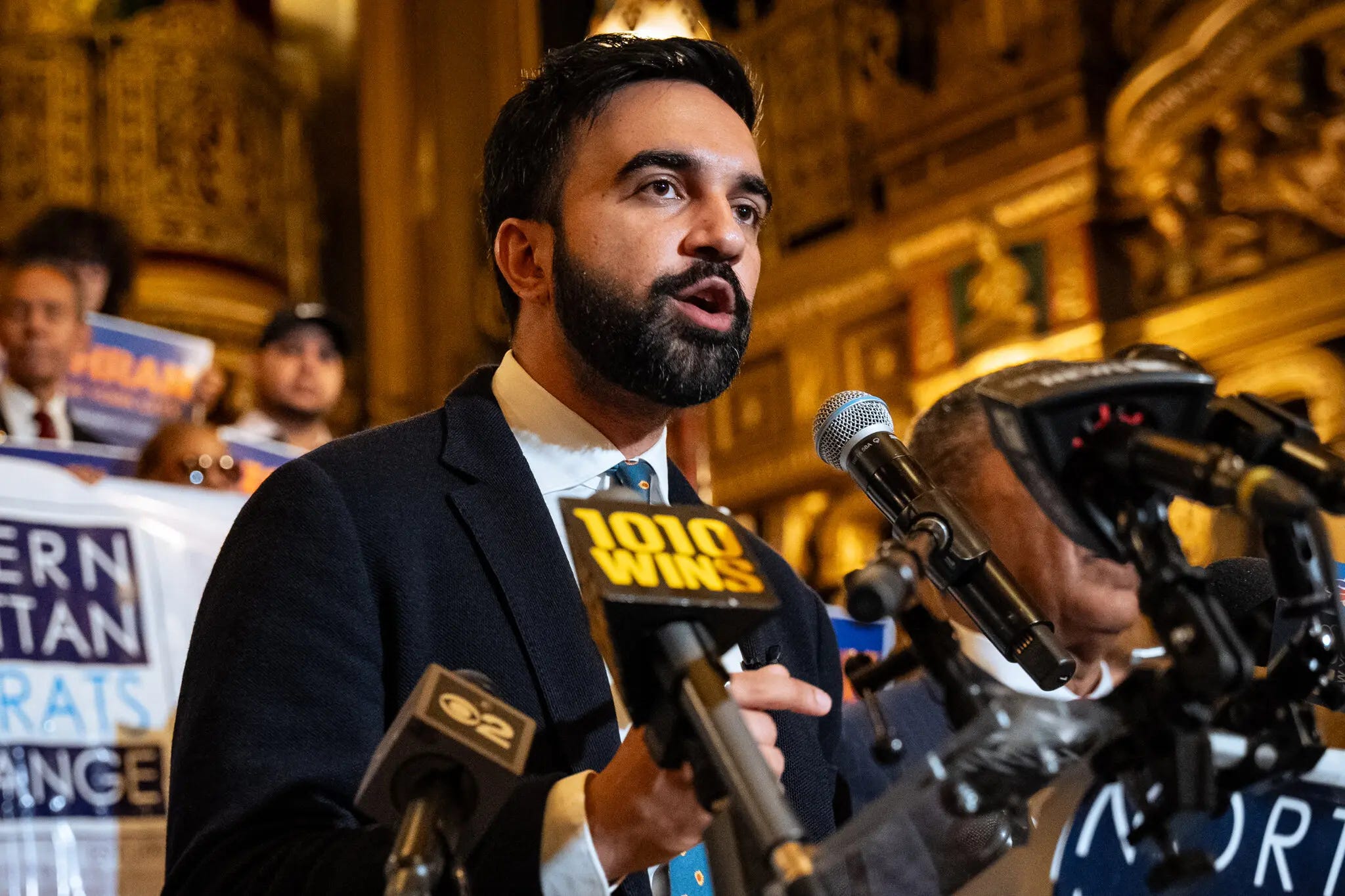
Consider Zohran Mamdani, whose recent victory in the Democratic primary for NYC mayor illustrates both the benefits and costs of political signaling.
Mamdani focused his campaign on costly signals that demonstrated outsider credibility. His rent freeze proposals and emphasis on fighting corporate exploitation alienated moderate Democrats and business interests but energized a new coalition of younger, working-class voters. Like Trump's outrageous statements, these costly signals suggested he didn't need elite approval to succeed, making him appear authentic and strong.
The evidence suggests these signals worked like springbok stotting, credibly signaling his fitness. A Data For Progress poll found that 78% of likely voters in New York City support rent freezes. A strong majority of economists are against rent control because it distorts allocation and reduces construction which keeps prices higher in the long run, but they clearly disagree with the median New York voter on this issue.
Zohran faces a different type of costly signaling dilemma around Israel-Palestine issues. He’s a member of the Democratic Socialists of America, an organization that released a statement referring to Israel as an apartheid regime on October 7, 2023. His political activism began when he founded a Students for Justice in Palestine chapter at Bowdoin College, and he has long supported the Boycott, Divestment, Sanctions movement against Israel. Recognizing the unpopularity of these positions among the New York City electorate, he's strategically avoided the topic during this race. Israel and Palestine go unmentioned on his campaign website.
Yet he can't fully escape the peacock trap. When asked about phrases like “globalize the intifada,” he refuses to condemn them, unable to alienate his progressive base even though these positions may hurt him with general election voters. Here we see the runaway dynamic: the same movement that elevated him now may constrain his appeal.
Even refusing to condemn a costly signal carries a real political cost. There is no easy solution here; even a coldly rational agent optimizing on votes would be in a bind. Zohran certainly can’t say “globalize the intifada” without pushing away a huge chunk of the New York City electorate, but he also can’t condemn the phrase without alienating his progressive base. Some small proportion of DSA types already think he’s betraying socialist principles by being a heartless Zionist, and he would see many more attacks from his left flank if he threw one of their favorite chants under the bus.

Just two days ago, the New York Times reported that in a meeting with prominent business leaders Mamdani said that he would “discourage” usage of the term “globalize the intifada.” He explained in the meeting that many people used the term to express solidarity with Palestinians, but that he also understood that others took it to endorse violence against Israel. He has decided to put some daylight between himself and this particularly costly signal.
This decision illustrates Mamdani’s awareness of both sides of costly signaling. Fitness-enhancing springbok signals helped to build his coalition, but he is beginning to turn away from the peacock ornaments that may constrain further growth. While he won the primary with a small group of activist loyalists, Zohran is now looking to experienced Democratic campaign operatives to help him win the general election.
This brings us back to “spiritually Israeli.” Like “globalize the intifada,” it represents costly signaling that may feel empowering to those who use it but ultimately impedes the movements they claim to support. Calling Crumbl Cookies “spiritually Israeli” might generate laughs and retweets among anti-Zionist activists, but it also makes them appear unserious to anyone they might hope to persuade.
The question for any movement is whether their costly signals demonstrate genuine strength or merely elaborate plumage. The battle for attention on the internet rewards ever-more-extreme positioning, creating powerful incentives toward over-ornamentation. But political movements that succeed in the long term often practice conscious discipline, resisting the algorithmic pull toward provocation and calibrating their signals strategically.
This doesn't mean abandoning principles or moderating into meaninglessness, but it means recognizing that viral and costly signals don’t always make effective messages. Misaligned evolutionary incentives gave peacocks their harmful ornamentation; no individual bird had any say in the matter. In contrast, the springbok fares better. Stotting remains useful for them, a deliberate act that keeps them alive. Springboks don’t stot endlessly, instead jumping just high enough to send their message to predators and then returning to the business of survival.
Political movements can be like springboks. They can choose when and how to send costly signals, understanding both the gains and losses from doing so. Those that can distinguish between signals that build power and signals that merely display it may find they can both maintain their principles and expand their influence.
